
Visit of the Australian Ambassador: Advancing Practical Cooperation on Gender Equality through Support Services for Women and Children Survivors of Gender-Based Violence at the “Peaceful House” Social Protection Center
On 5th November 2025, on the occasion of the National Action Month for Gender Equality and the Prevention and Response to Gender-Based Violence, the Australian Global Ambassador for Gender Equality, Ms. Michelle O’Byrne; the Representative of the United Nations Entity for Gender Equality and the Empowerment of Women (UN Women); Ms. Caroline Nyamayemombe; together with experts, coordinators, and development attachés from the Australian Embassy and UN Women in Viet Nam, visited and held a working session with the Center for Community Welfare and Diversity (CWD).
The visit aimed to exchange information, share practical experience, and learn about the model of providing services to women and children affected by gender-based violence implemented by CWD. In the context where gender-based violence remains a global challenge, the visit and working session of the Australian Global Ambassador for Gender Equality, Ms. Michelle O’Byrne, and the delegation went beyond a routine diplomatic activity. It served as a substantive dialogue between international development partners and a practice-based model of victim support in Vietnam – the Peace House Shelter – which has been striving to build a humane, comprehensive, and sustainable protection system for women and children.
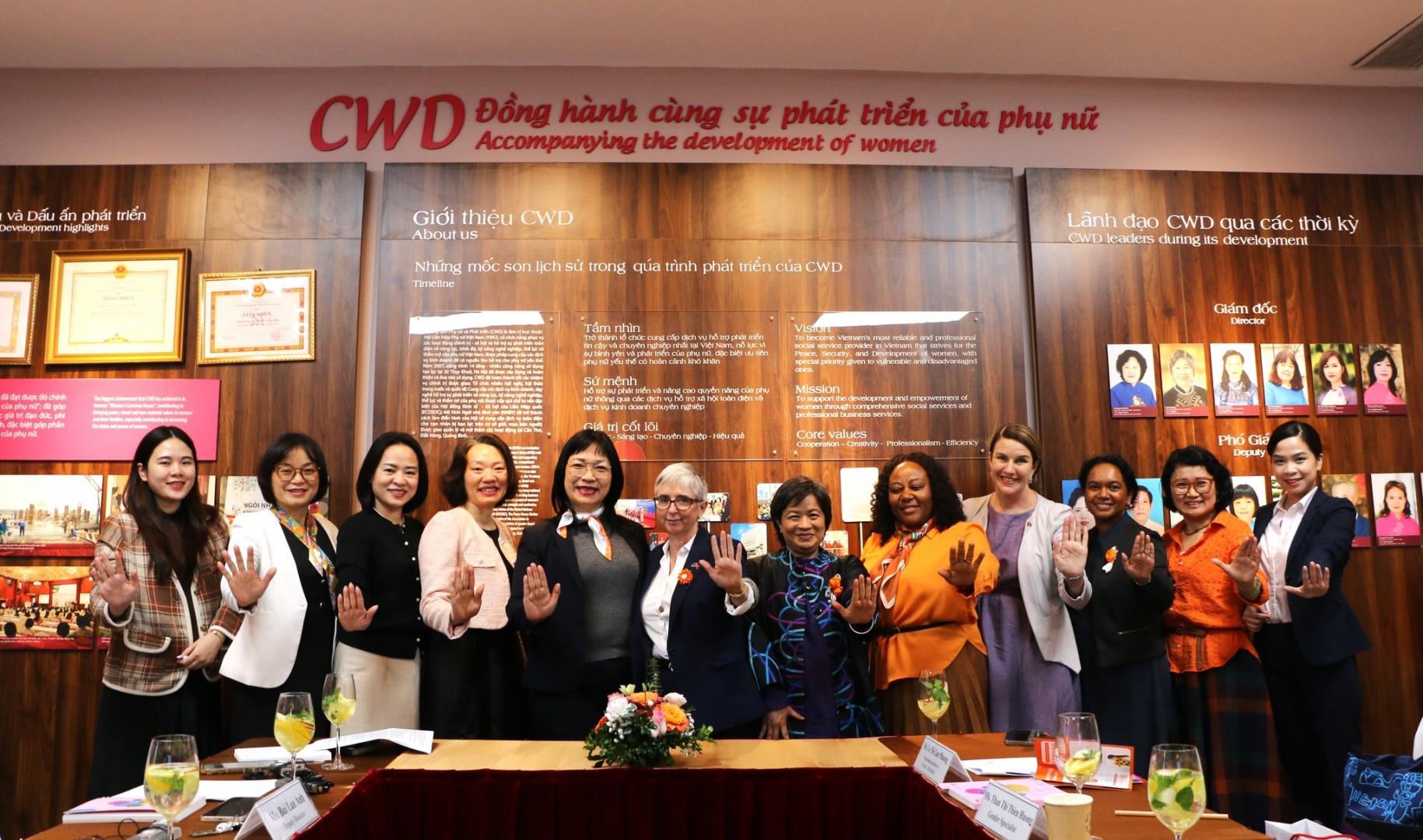
The Australian Ambassadorial Delegation took a souvenir photo at the Traditional Room of the CWD during the visit
Gender equality in the practice of operating support service systems
Gender equality cannot be achieved solely through declarations or commitments; it must be demonstrated through the operational capacity of support institutions at the grassroots level. The visit of Ms. Michelle O’Byrne and the UN Women delegation to CWD raised a practical and internal issue: a well-organized support service system determines the extent to which equality values are realized in everyday life.
During the working session, the CWD’s director presented an overview of the service system currently in operation, including psychological counseling, case management, legal aid, referral linkages, and post-intervention follow-up. Discussions focused on service integration, information confidentiality procedures, and coordination mechanisms among specialized units.
Ms. Michelle O’Byrne shared at the meeting: “Witnessing firsthand how the Center organizes and delivers services shows that this is a model developed with seriousness, placing the safety of women and children at the center. These experiences provide valuable references for improving the quality of support services.”
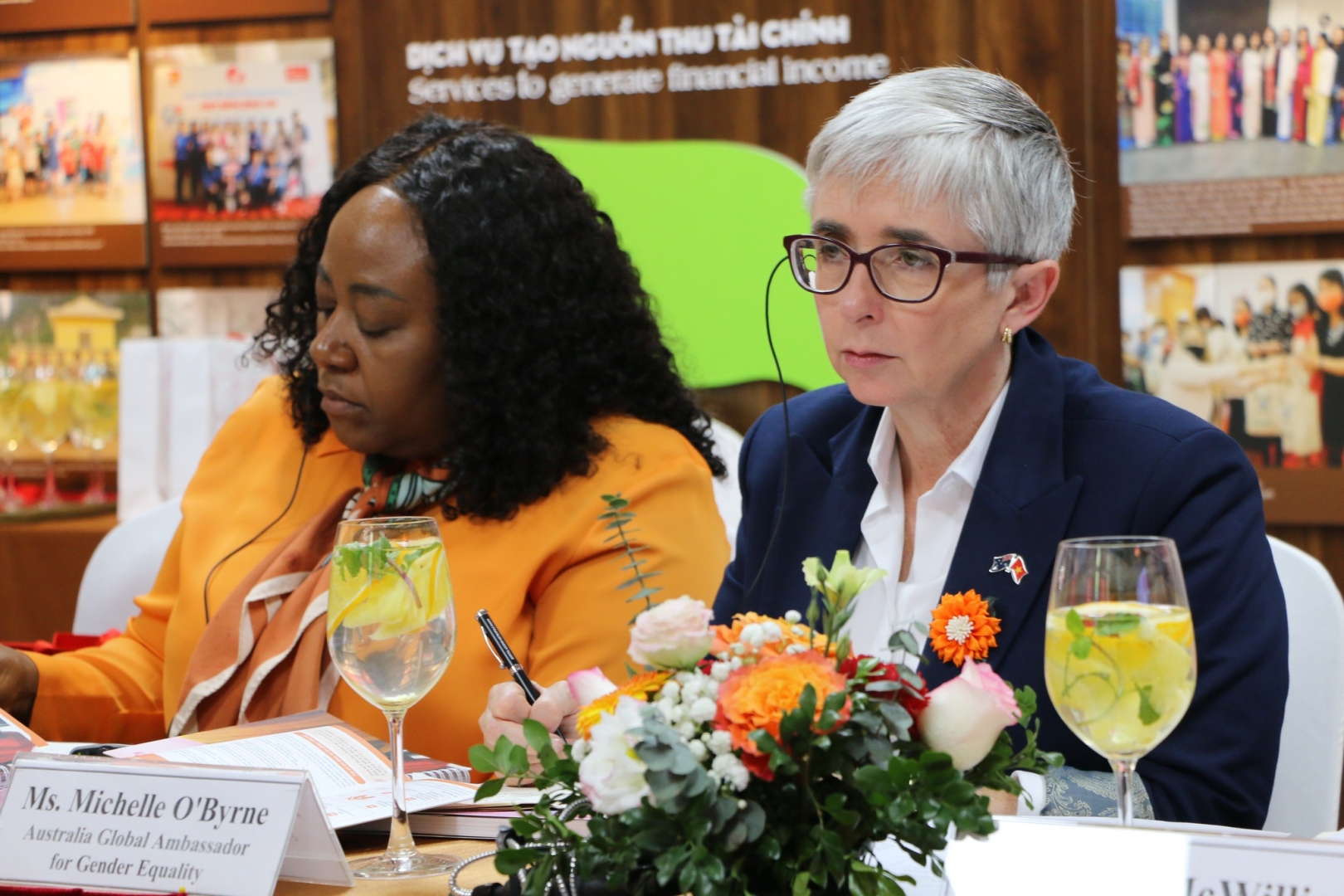
Australia's Global Ambassador for Gender Equality - Ms. Michelle O'Byrne; Head of the United Nations Entity for Gender Equality and the Empowerment of Women (UNWOMEN) shared during her visit
Highlighting the role of the Peace House Shelter
As part of the program, the delegation visited the Peace House Shelter, learning about the intake, care, and support process for residents. Issues related to information confidentiality, private spaces, psychological care, and safe living arrangements received special attention from the delegates.
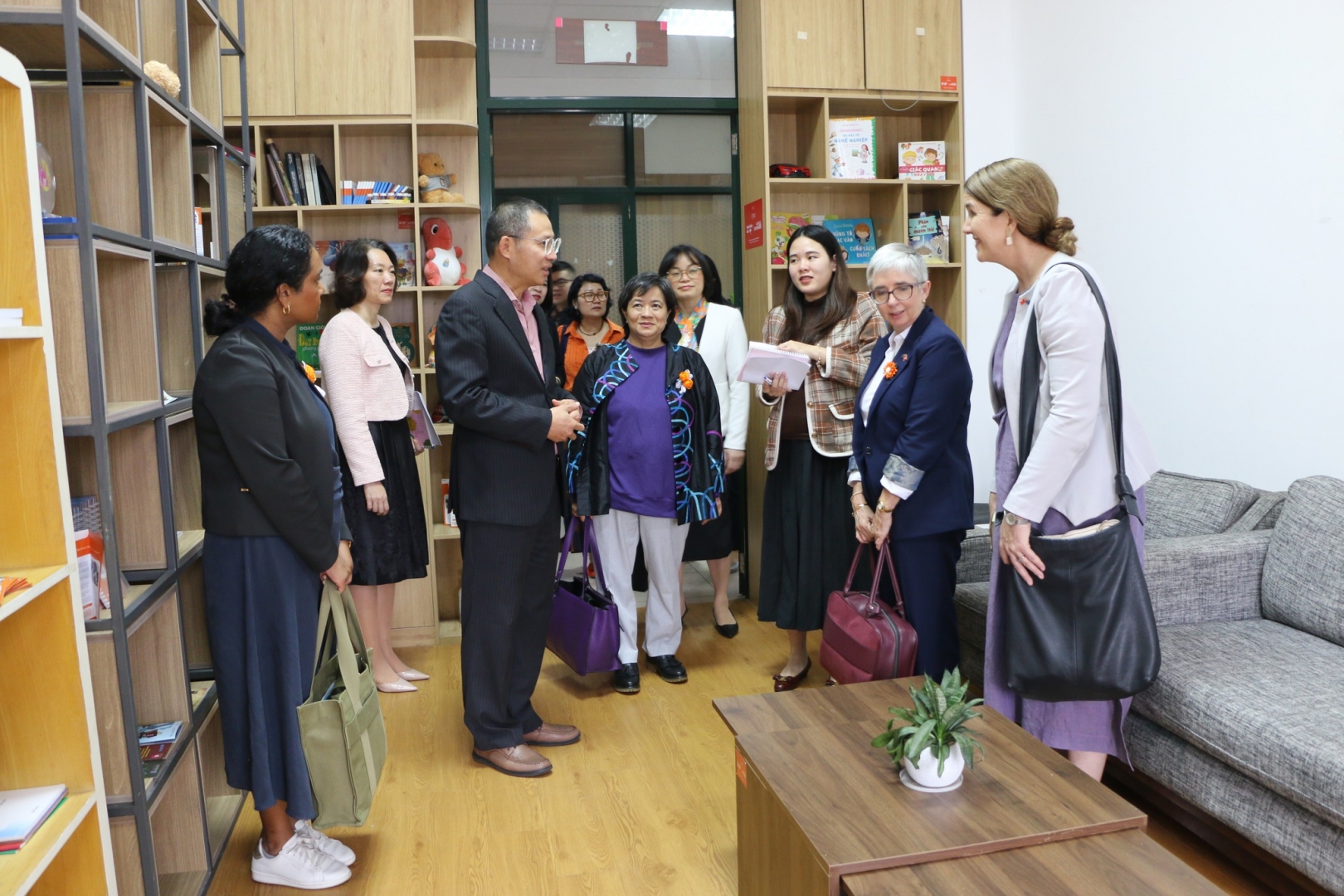
Australian Ambassador Delegation visits Peace House Shelter
Ms. Duong Thi Ngoc Linh, Deputy Chief of the Office of the Central Committee of the Viet Nam Fatherland Front and Director of Center for Community Welfare and Diversity (CWD), stated: “The Peaceful House is not only a shelter, but a key link in the protection service chain, helping beneficiaries gradually stabilize their mental well-being and rebuild their lives.”
In addition to the achieved results, both sides frankly exchanged views on existing challenges, such as pressure on specialized human resources, the diverse needs of beneficiaries, and the increasing requirements for service standardization.
Ms. Caroline Nyamayemombe, Representative of UN Women, noted: “To meet real needs, support facilities need to gradually expand their service scope and enhance the level of specialization, especially for vulnerable groups of women and children.”
Future directions
Based on the exchanges, the Center for Community Welfare and Diversity stated that it would gradually expand the target beneficiary groups, focusing on high-risk groups that currently have limited access to services, such as women with disabilities, migrant women, ethnic minority women, female workers in the informal sector, and children in special circumstances.
At the same time, CWD plans to broaden its support areas more fully, including specialized psychological support, long-term legal counseling, livelihood support, life skills training, and strengthened job placement service linkages after the shelter period. The goal is to enhance recovery capacity and reduce the risk of re-victimization among women and children.
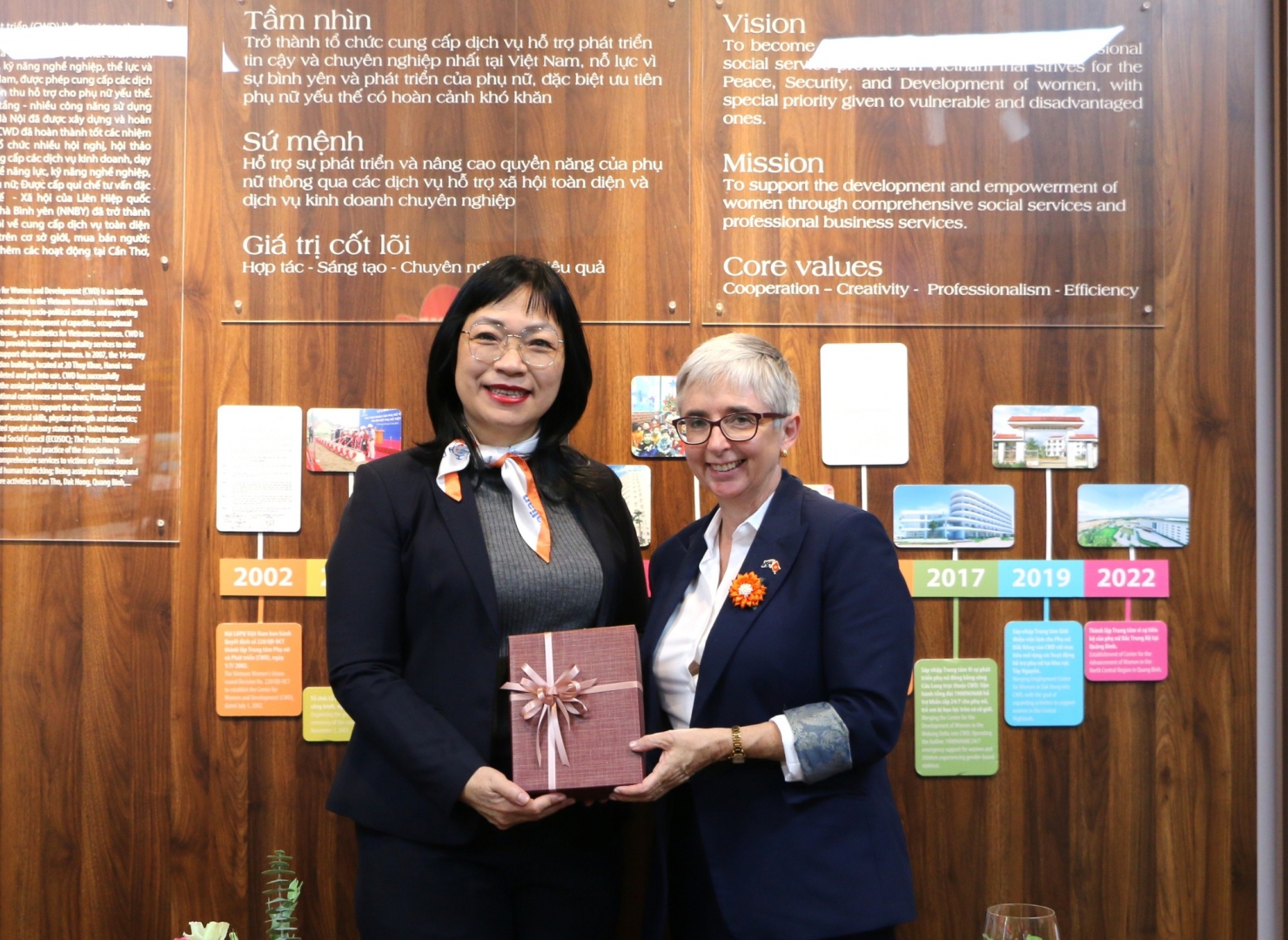
Ms. Duong Thi Ngoc Linh - Director of CWD and Ms. Michelle O'Byrne - Chief Representative of UNWOMEN expressed their desire to maintain cooperation and exchange expertise in the coming time
The visit and working session of the delegation was considered an important opportunity for the Center to review and improve its operational model, while strengthening connectivity and experience sharing to improve the practical quality of support services.
Through this activity, the parties agreed to maintain professional exchanges, coordinate in capacity-building activities, and gradually promote initiatives to ensure safety for women and children in the coming period.